
Myofunctional Therapy in Manhattan and Online
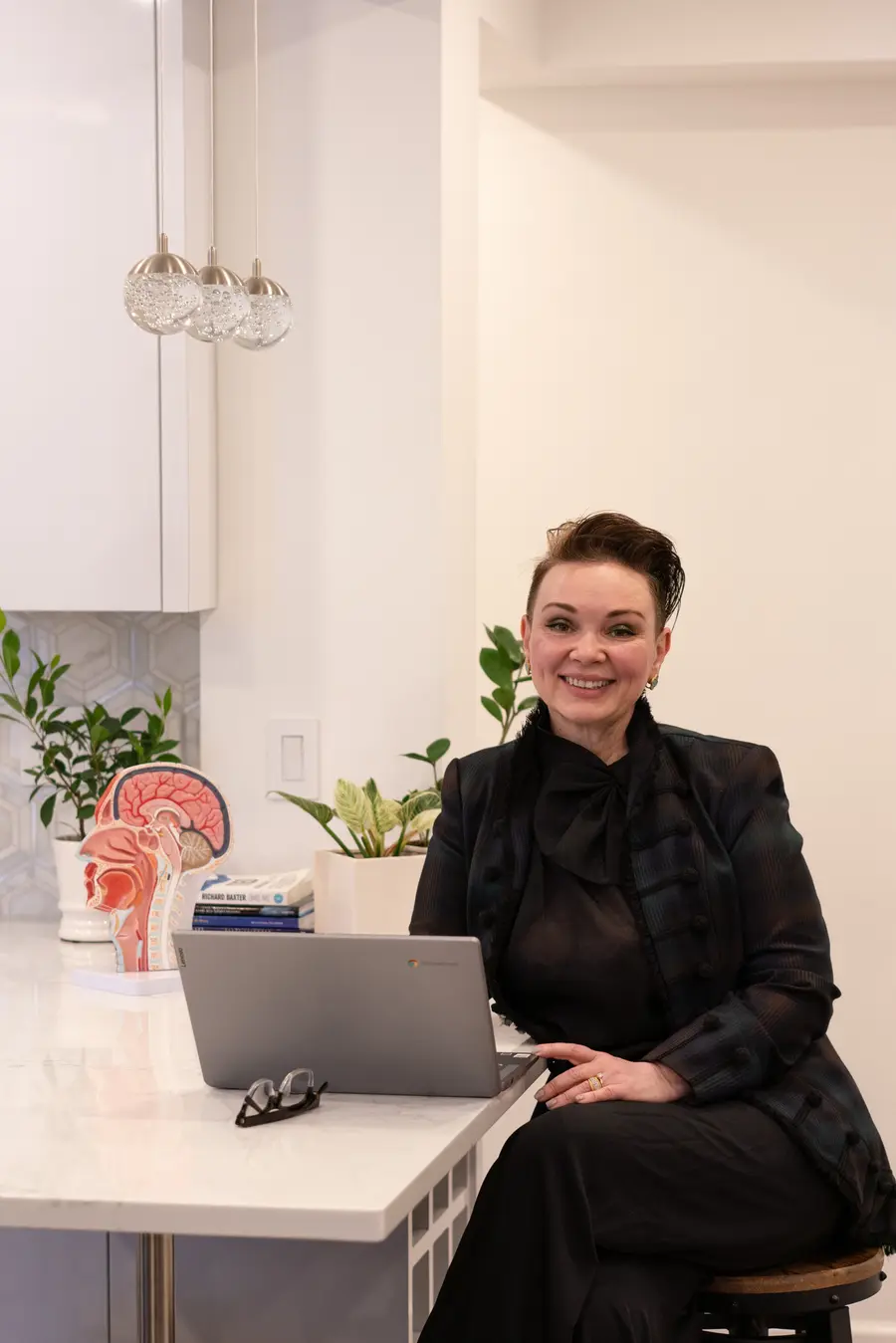
At Happy Myo, I provide airway-focused orofacial myofunctional therapy in Manhattan, NYC, and online worldwide via Zoom. I'm Julia Yarovoy, a Certified Orofacial Myofunctional Therapist (AOMT), and I have worked in oral health in Manhattan since 2008. I help adults and children ages four and up retrain the muscles of the mouth, face, and tongue so they can breathe, swallow, and rest with healthy function.
Many people never think about how their tongue rests or how they breathe until a dentist, orthodontist, or physician points to a pattern that keeps causing trouble. Myofunctional therapy is a gentle, drug-free, non-surgical way to change those patterns at the source.
What is myofunctional therapy?
Myofunctional therapy refers to an exercise regimen of the facial musculature that helps address Orofacial Myofunctional Disorders (OMDs). Rather than masking symptoms, it retrains the tongue, lips, and facial muscles to work the way they are meant to, so that healthy breathing, chewing, and swallowing become automatic again.
What are orofacial myofunctional disorders (OMDs)?
According to the Academy of Orofacial Myofunctional Therapy (AOMT), OMDs are "disorders of the muscles and functions of the face and mouth. OMDs may affect, directly and/or indirectly, breastfeeding, facial skeletal growth and development, chewing, swallowing, speech, occlusion, temporomandibular joint movement, oral hygiene, stability of orthodontic treatment, facial esthetics, and more."
In everyday terms, an OMD is present when the tongue, lips, or jaw sit or move in a way that works against healthy breathing and function. A tongue that rests low or pushes forward, a mouth that hangs open, or a swallow that recruits the wrong muscles can quietly shape how a person breathes, sleeps, and even how their teeth line up over time.
How myofunctional therapy works
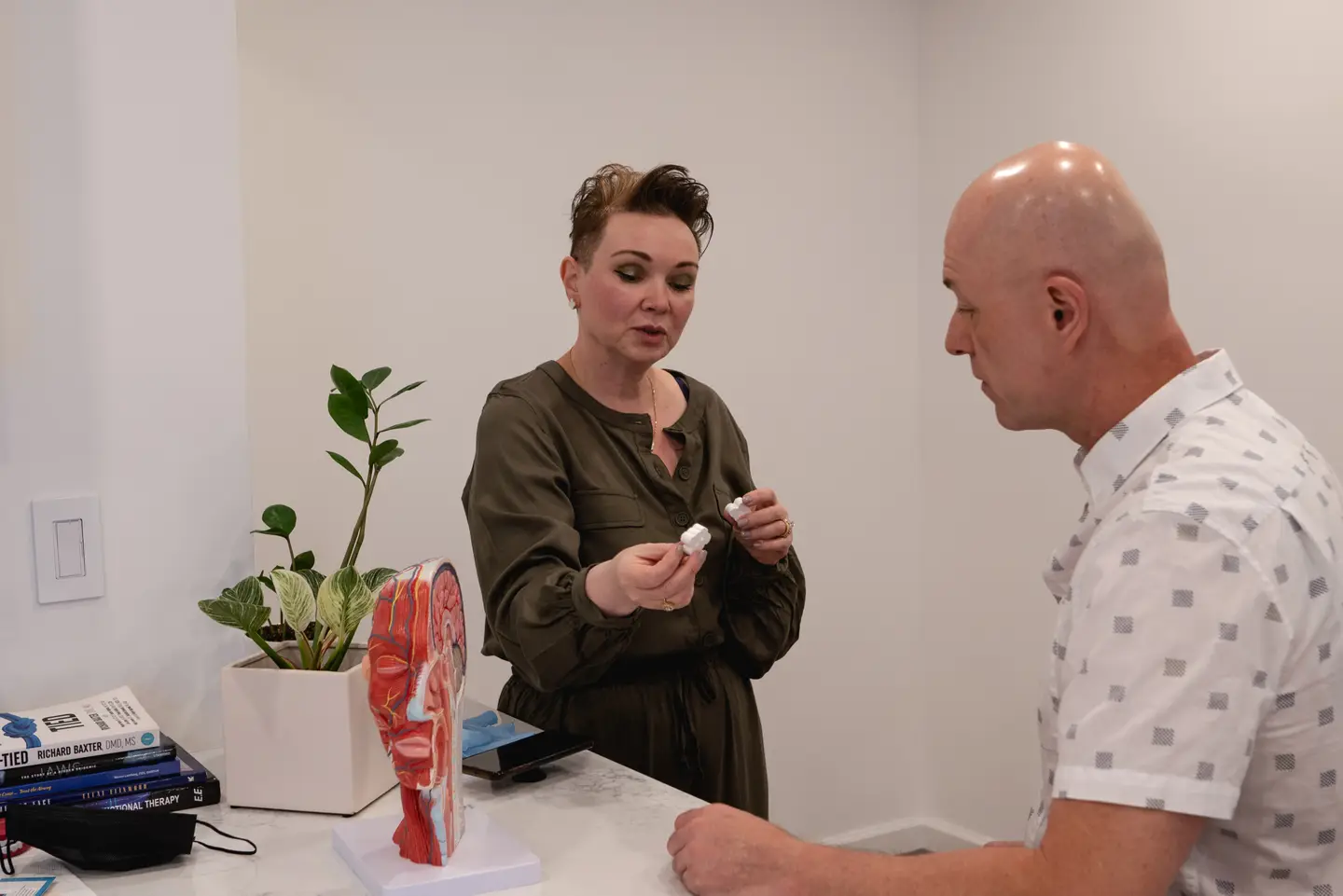
The premier approach to addressing OMDs is Orofacial Myofunctional Therapy, or OMT. A myofunctional therapist creates a specialized program suited to your specific needs. Every regimen is different and must be tailored to the individual, and having an expert guide is crucial to long-term success.
The work draws on neuroplasticity, the nervous system's ability to build new patterns through consistent, repeated practice. Exercises are done with and without props, which are provided free of charge by Happy Myo after the initial assessment. The work is not magic. It requires consistent practice and regular check-ins with your myofunctional therapist. The results of following the program, however, certainly feel like magic. Without drugs or surgery, you'll see marked improvements in the function of your orofacial musculature.
For a more granular explanation, see the blog post Myofunctional Therapy: An Addendum.
What myofunctional therapy can help with
Because breathing, oral function, and sleep are closely connected, myofunctional therapy can support a wide range of concerns. It may benefit people experiencing:
- Mouth breathing and open-mouth rest posture
- Tongue thrust and incorrect swallowing patterns
- Low tongue rest posture
- Snoring and disrupted, unrefreshing sleep
- Thumb, finger, and prolonged pacifier habits
- Teeth grinding and clenching
- Teeth shifting after orthodontic treatment
- Difficulty chewing or swallowing
- Jaw and facial muscle tension
- Tongue-tie (ankyloglossia)
Tongue-tie and myofunctional therapy
Myofunctional therapy before and after a tongue-tie release prepares the muscles, supports healing, and helps you get the full benefit of the procedure. I do not perform the release itself. I work in coordination with your release provider, with frequent check-ins throughout. For children and adults.
Myofunctional therapy for adults and children
Happy Myo works with adults and children ages four and up. Adults often come in because of snoring, disrupted sleep, jaw tension, or teeth that keep shifting after orthodontic work, and they are pleasantly surprised at how much daytime breathing and rest can change. For children, early support can help guide healthy growth and gently unwind habits like thumb sucking or tongue thrust before they leave a lasting mark on development.
What working together looks like
We begin with a thorough assessment of how you breathe, rest your tongue, chew, and swallow. From there I build a personalized program, provide the exercise props free of charge, and check in regularly so the new patterns become comfortable and automatic. Meetings are usually once a week to begin with, then taper down as the habits take hold. More about what an assessment and program look like is on the An Assessment with Julia page.
Myofunctional therapy in Manhattan and online
I offer orofacial myofunctional therapy in person in Manhattan, NYC, and online worldwide via Zoom. The exercises translate well to video, so many clients complete their entire program from home. Prefer to work entirely remotely? See Online Myofunctional Therapy. To find out whether myofunctional therapy is right for you or your child, please reach out through the Contact page for a complimentary consultation.
Myofunctional therapy often works best alongside my other two areas of practice. If your concerns are mainly about how you breathe, see Buteyko Breathing; if they are mainly about how you sleep, see Adult Sleep Coaching.
What clients say
5.0 on Google“My experience with myofunctional therapy has been excellent with Julia. She shares very clear educational instructions and tools that have been practical to apply in my daily life…”
“I've been working with Julia for a few months now and honestly can't recommend her enough. She really cares about her clients. She takes detailed notes, remembers all the little things, and is a great listener…”
Frequently asked questions
What is myofunctional therapy?
Myofunctional therapy is a program of individualized exercises that retrain the muscles of the tongue, face, and mouth to work correctly at rest and during breathing, chewing, and swallowing. It is drug-free and non-surgical, and it is used to address orofacial myofunctional disorders (OMDs) in both children and adults.
Who is myofunctional therapy for?
Happy Myo works with adults and children ages four and up. It is often helpful for people dealing with mouth breathing, tongue thrust, snoring, oral habits such as thumb sucking, or muscle patterns that keep undoing orthodontic work. Every program is tailored to the individual after an assessment.
Do you offer myofunctional therapy in Manhattan or online?
Both. Julia sees clients in person in Manhattan, NYC, and works with clients online worldwide via Zoom. The exercises translate very well to video, so many people complete their program entirely online.
Does myofunctional therapy involve surgery or pain?
No. Myofunctional therapy is gentle, exercise-based, and drug-free. It involves no surgery and no medication, just guided exercises you practice over time.
How long does myofunctional therapy take?
It varies by person and goal. A typical course begins with a weekly intensive phase and then tapers as the new patterns become habit. You can see the phases and timeline on the An Assessment with Julia page.