
What Should I Do Before and After Double Jaw Surgery to Ensure the Best Outcome?
Why breathing, tongue posture, and neuromuscular adaptation play a critical role in recovery and long-term stability after orthognathic surgery.
Patients rarely arrive at the decision to undergo double jaw surgery quickly. It is usually the result of years, sometimes decades, of adapting to structural limitations that affect breathing, oral function, sleep quality, and overall physiologic balance. Some have struggled with airway restriction, chronic mouth breathing, or a diagnosis of obstructive sleep apnea. Others have lived with bite instability, muscle tension, or compensatory patterns they may not have fully understood, but have felt in their daily lives.

Double jaw surgery, or bimaxillary orthognathic surgery, is one of the most powerful structural interventions available to improve occlusion, airway volume, and craniofacial balance. By repositioning the maxilla and mandible, surgeons can correct skeletal discrepancies that influence breathing, chewing efficiency, facial symmetry, and long-term dental stability. From a structural perspective, the change is immediate. From a functional perspective, adaptation is gradual. This distinction is not always emphasized, yet it is central to long-term success.
The orofacial complex is not simply a collection of bones. It is a dynamic neuromuscular system shaped by breathing patterns, tongue posture, swallowing mechanics, and nervous system regulation. These functional patterns develop over years, often decades, as adaptive responses to structural limitations. When the structure changes surgically, the neuromuscular system must learn how to operate within this new anatomical environment. Myofunctional therapy provides the framework for that adaptation. The brain and muscles operate based on learned motor patterns. These patterns are established through repetition and reinforced through the nervous system.
Patients preparing for orthognathic surgery commonly present with functional adaptations such as:
Low resting tongue posture
Mouth breathing, particularly during sleep
Forward head posture
Increased perioral muscle activity during swallowing
Jaw muscle overactivity, including clenching and bruxism
These patterns are not arbitrary. They are compensatory strategies that allow the individual to maintain airway patency and functional stability within a structurally constrained system. Even after surgical correction, the nervous system does not automatically abandon these learned behaviors. Without intervention, the body often continues to rely on familiar motor programs, even when they are no longer necessary. This phenomenon, sometimes referred to as neuromuscular memory, underscores the importance of functional retraining.
Pre-surgical myofunctional therapy focuses on establishing physiologic patterns that support surgical outcomes and improve the body’s readiness for recovery. One of the primary goals is restoring nasal breathing. Nasal breathing plays a fundamental role in respiratory efficiency, nitric oxide production, air filtration, and autonomic nervous system regulation. Chronic mouth breathing is associated with altered craniofacial muscle tone, reduced airway stability, and increased sympathetic nervous system activity. I often observe that patients who establish consistent nasal breathing prior to surgery demonstrate greater physiologic resilience during recovery. Tongue posture is another critical component. The tongue is not only a functional organ for speech and swallowing, it is also a structural stabilizer. At rest, the tongue should rest gently against the palate, providing continuous, balanced support to the maxillary arch. When the tongue rests low in the oral cavity, this stabilizing influence is absent. Teaching patients to develop awareness and control of resting tongue posture prior to surgery helps establish functional patterns that can be maintained postoperatively. Dysfunctional swallowing patterns often involve compensatory recruitment of the lips, mentalis, and facial musculature. These patterns can exert intermittent forces on the dentition and surrounding structures. Optimizing swallowing function reduces unnecessary muscular strain and promotes coordinated neuromuscular activity. Beyond local muscle function, breathing retraining influences systemic regulation. Slow, nasal, diaphragmatic breathing improves carbon dioxide tolerance, enhances oxygen delivery through the Bohr effect, and supports parasympathetic nervous system activity.
In my clinical experience, patients frequently report improved sleep quality, reduced muscle tension, and a greater sense of physiologic calm even before undergoing surgery. These changes reflect improved functional efficiency.
After surgery, patients must adapt to a new skeletal framework. The airway is often larger. The tongue has more available space. The relationships between muscles, bones, and soft tissues have changed. However, without guided retraining, patients may continue to exhibit pre-existing functional patterns. It is not uncommon for patients with increased airway volume to continue mouth breathing out of habit. Similarly, low tongue posture may persist despite improved palatal anatomy. Myofunctional therapy supports the process of neuromuscular adaptation. Therapy focuses on restoring appropriate resting posture, improving muscle coordination, and reinforcing nasal breathing patterns. This process involves progressive, targeted exercises designed to improve strength, endurance, and proprioceptive awareness. Over time, new motor patterns become established and integrated into unconscious function. This integration is essential for long-term stability.
The tongue alone generates low-grade, sustained forces throughout the day and night. When properly positioned against the palate, these forces contribute to structural stability. When tongue posture remains low or dysfunctional swallowing persists, the direction and magnitude of muscular forces may not support the intended surgical outcome. Orthodontic relapse is multifactorial, but functional influences play a significant role. Myofunctional therapy helps ensure that muscular forces support, rather than counteract, the surgical correction. This is not about forcing the body into an unnatural state. It is about restoring physiologic balance.
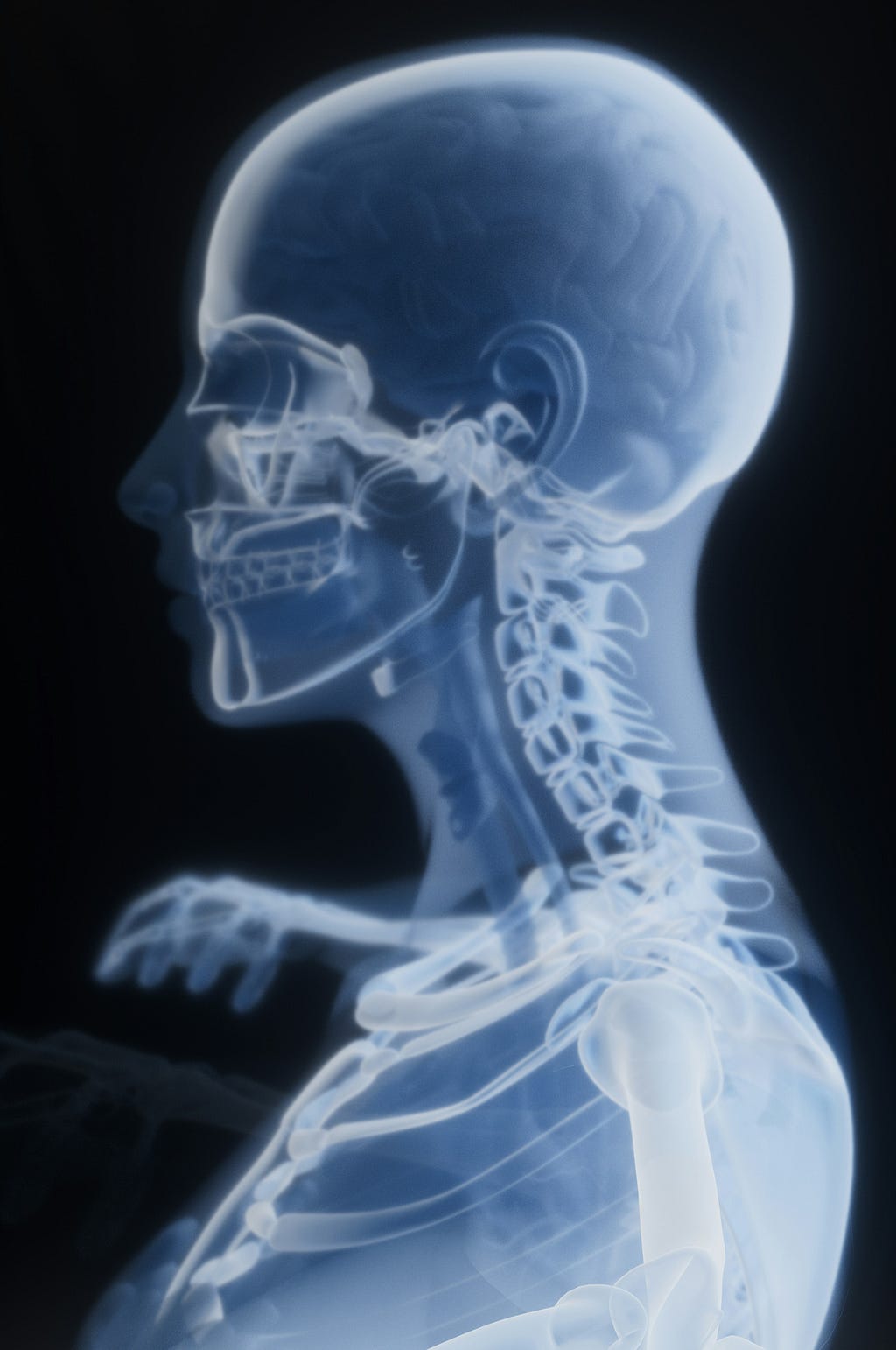
While objective measures such as airway volume, occlusal relationships, and skeletal alignment are important, patients often describe their progress in functional terms. They describe breathing that feels quieter and more effortless. They notice reduced jaw tension. They report improved sleep continuity. They experience less fatigue. These changes reflect improved efficiency of the respiratory and neuromuscular systems.
Recommendations for Patients Undergoing Double Jaw Surgery
If you are planning to undergo double jaw surgery, it is worth considering not only the structural correction, but the functional adaptation that follows. When breathing patterns, tongue posture, and neuromuscular coordination are supported before and after surgery, patients often transition more smoothly into their new anatomy. Over time, the changes begin to feel less like an adjustment and more like a return to something inherently natural: breathing becomes quieter, muscles become less burdened, and the system functions with greater ease. In this way, surgery does more than reposition structure. It creates the opportunity for the body to function in a way it may not have been able to before.
Enjoyed this? Read & clap on Medium ↗