
Do You Ever Fall Asleep on Your Morning Commute?
What sleeping commuters on the Manhattan subway made me wonder about sleep pressure, sleep quality, breathing, and daytime sleepiness.
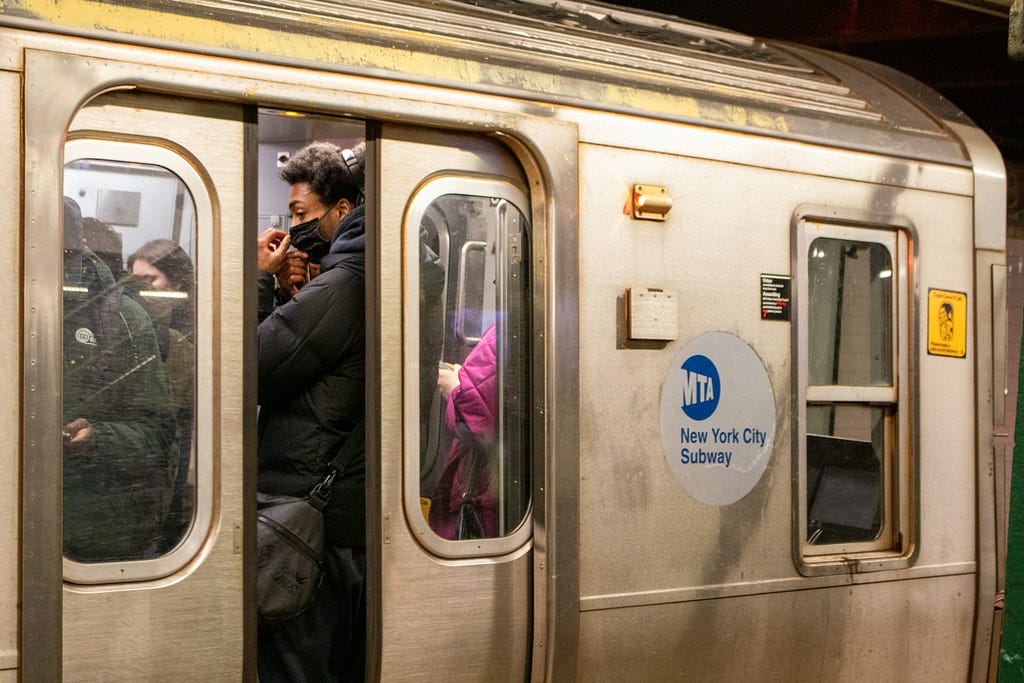
When I ride the subway in Manhattan, I love watching people. Some read. Some scroll through their phones. Some chat. Some stare quietly into space. And some sleep — heads against the window, chins dropping toward their chests, somehow undisturbed by screeching brakes, announcements, opening doors, and hundreds of people moving around them. Of course, there may be a perfectly good reason. The person across from me may be a new parent who was up half the night with a baby. Someone else may be coming home after a night shift, on the way to a well-deserved restorative sleep. Someone may simply have gone to bed much too late. But watching people fall asleep on the New York City subway is actually one of the things that piqued my interest in sleep. I kept wondering, what makes someone sleepy enough to fall asleep in broad daylight, on a moving train, surrounded by noise? When you really think about it, it is rather remarkable. From the time we wake up, the biological pressure to sleep gradually begins building again. One of the substances involved in this process is adenosine. Adenosine accumulates in the brain during waking hours and contributes to what scientists call homeostatic sleep pressure. In simple terms, the longer we have been awake, the stronger our drive to sleep generally becomes. Sleep helps reduce that pressure so we can begin the next day feeling restored and alert. But sleep pressure isn’t working alone. We also have our circadian rhythm, our approximately 24-hour internal biological clock. Among its many functions, the circadian system helps regulate when we feel alert and when our bodies are biologically prepared for sleep. These two systems work together throughout the day.
So what happens when last night’s sleep didn’t quite do its job? You may have gone to bed at a reasonable hour. You may have spent seven or eight hours in bed. You may even believe you slept through the night. Then you finally find a seat on the subway at 8:17 in the morning. The train starts moving. Your phone is still in your hand. And your eyes begin to close. That is the part that fascinates me.
We tend to measure sleep by time. “How many hours did you sleep?” But perhaps we should also be asking: “How well did you sleep during those hours?” Sleep is not simply an on-and-off switch. Throughout the night, the brain cycles through different stages of sleep, each associated with important physiological functions. The continuity and quality of that sleep matter. Sometimes sleep can be repeatedly disrupted without us being fully aware of it. A person doesn’t necessarily have to sit upright, look at the clock, and remember waking up. The brain can briefly shift toward lighter sleep or wakefulness and then return to sleep, leaving little or no conscious memory of the interruption. And breathing can sometimes be part of that story. When we fall asleep, muscle tone changes throughout the body, including in the structures surrounding the upper airway. For some people, the airway may become more vulnerable to narrowing during sleep. Airflow can become limited, breathing effort may increase, and snoring or other forms of sleep-disordered breathing may occur. When breathing becomes sufficiently challenged, the nervous system may respond with brief arousals that help restore or stabilize airflow. The person may never remember them. They may simply wake up thinking: “I slept eight hours. Why am I still tired?” And later that morning, perhaps they fall asleep on the train. This does not mean that everyone who sleeps on the subway has sleep apnea or an airway problem. Daytime sleepiness has many possible explanations, including insufficient sleep, shift work, parenting, stress, illness, medications, circadian disruption, and lifestyle factors. But persistent daytime sleepiness is information.

For many of us, the next step is automatic. We reach for coffee. Interestingly, caffeine doesn’t erase our need for sleep. It primarily works by blocking adenosine receptors in the brain, temporarily reducing our perception of sleep pressure. That cup of coffee may help us feel more alert, but it cannot substitute for restorative sleep. Perhaps that is why the combination is so familiar on a Manhattan morning commute: coffee in one hand, phone in the other, and still struggling to keep our eyes open. We have become so accustomed to being tired that sometimes we don’t even think of ourselves as tired anymore. I can fall asleep anywhere. Sometimes there is a perfectly simple explanation. But sometimes we don’t realize that our sleep may not be ideal until we start asking questions about it. One of the simplest tools I use in my practice is also one of the most revealing. I use a short screening questionnaire called the Epworth Sleepiness Scale (ESS) with my patients.

It asks how likely a person is to doze off in several ordinary situations: while reading, watching television, sitting quietly after lunch, riding as a passenger in a car, and even sitting and talking with someone. I find these questions interesting because they make us stop and think about something we may have simply accepted as normal. How often do I actually feel sleepy during the day? Could I easily fall asleep if I sat quietly for a few minutes? Am I fighting sleep when I shouldn’t be sleepy? We adapt remarkably well to how we feel. If something happens every day, it can gradually become our version of “normal.” Feeling tired becomes normal. Falling asleep whenever we have a quiet moment becomes normal. Needing caffeine to get through the day becomes normal. And this brings me right back to the subway. Falling asleep as a passenger during a commute doesn’t tell us why someone is tired, and the Epworth Sleepiness Scale cannot diagnose a sleep disorder. It measures subjective daytime sleepiness and is a screening tool, not a diagnosis. But screening can make us notice a pattern we may have been overlooking. That is its value. It gives us a reason to ask more questions, other questions. When symptoms or screening findings raise concern about sleep or airway health, appropriate medical evaluation is important. But I do think we can become better observers of our own bodies. The next time I am sitting on the Manhattan subway watching New York wake up around me, I will probably still notice the person peacefully sleeping through the screech of the train. And I will still wonder. Did they simply have a very long night, or is their body trying to recover from sleep that wasn’t quite as restorative as they think?
Enjoyed this? Read & clap on Medium ↗