
The Parted Lips of Sleeping Eros
A few weeks ago, I visited the MET museum with the intention of immersing myself in decorative Asian art. The intricate craftsmanship, the precision of detail, and the quiet mastery always leave me inspired. I love small details, they reveal the patience, intention, and devotion of the artist.
Wandering through museum’s halls, I soon found myself surrounded by Greek and Roman art. The atmosphere shifted, no longer delicate and ornamental, but monumental. These statues stood with undeniable presence, massive forms, bold musculature, faces defined and strong.
As a myofunctional therapist, my eyes are naturally drawn to craniofacial development. I can’t help but notice overall balance of the facial structures. The Greeks idealized symmetry, proportion, and strength, these are qualities that still carry meaning in health and airway development today.
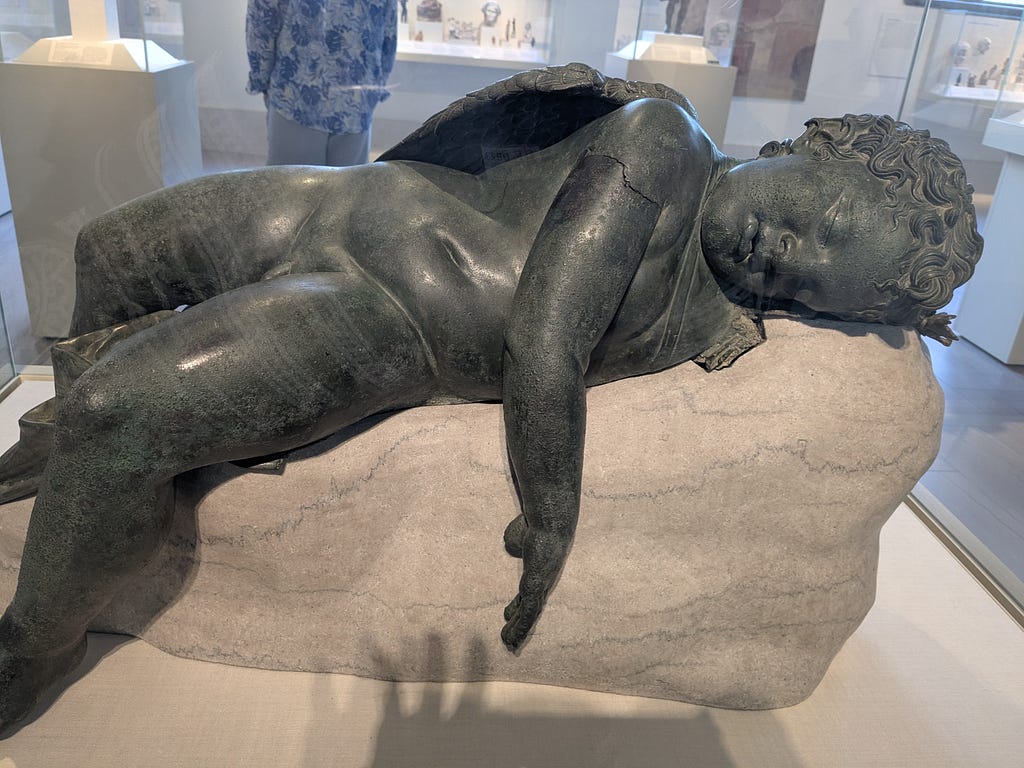
Then, I stumbled upon a piece that stopped me in my tracks, the bronze statue of a sleeping Eros. The god of love, depicted not as the usual playful archer but as a vulnerable child, curled in slumber. His body is relaxed, limbs heavy with sleep, but his lips are slightly parted. That detail caught me. Parted lips while sleeping always make me pause. Was this artistic choice meant to show the innocence of sleep? Or did the sculptor, perhaps unconsciously, capture a subtle sign we as therapists recognize: mouth breathing?
From a clinical perspective, parted lips in sleep can suggest several possibilities. Nasal congestion — perhaps an obstruction that makes nasal breathing difficult. Low tongue posture — the tongue resting down instead of supporting the palate, allowing the lips to fall open. Habitual mouth breathing — which in modern understanding, impacts facial growth, airway health, and even sleep quality.
Of course, in art, it may simply be symbolism. An open mouth may represent vulnerability, surrender, or the pure relaxation of a child at rest. Yet, as someone deeply attuned to airway health, I couldn’t ignore the parallel to what I see daily in my practice. The smallest detail, a parted lip, becomes a window into the intersection of art, anatomy, and health.
What fascinates me most is how timeless these observations are. Whether in the marble halls of antiquity or the therapy rooms of today, the human face tells a story. It carries clues not only about beauty but about function, vitality, and well-being. Standing before Sleeping Eros, I was reminded that art doesn’t just capture beauty, it captures truth. And sometimes, truth is hidden in the details we are trained to see.
If you’ve ever wondered what your own breathing and facial features might be telling you, I invite you to explore it with curiosity. The smallest details often hold the biggest truths about our health and vitality. If you’d like to learn more, I share additional resources at Happy Myo
Enjoyed this? Read & clap on Medium ↗